


Edo Sato Kagura


About the Festival of Anazawa Tenjin Shrine
The annual grand festival of Anazawa Tenjin Shrine is held on the Sunday before August 25.
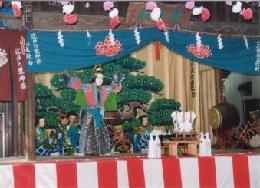
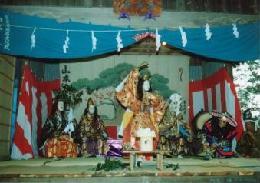
Edo's Satokagura can be seen from around 1 p.m. at the Kaguraden within Anazawa Tenjin Shrine.
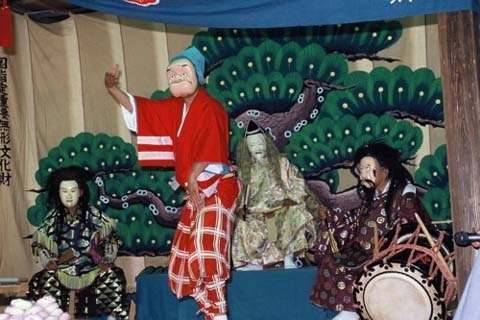
The History of Kagura and Edo's Satokagura
Kagura is a performing art that originated in ancient times and is said to have the oldest history among folk performing arts. Its origin lies in performances meant to comfort the divine spirits, and it was a dance dedicated to the gods. The word "Kagura" is believed to derive from the term "Kamiza," which means "the seat where the divine spirit rests when invited and welcomed."
Kagura, which originated in ancient times, was transmitted throughout Edo city in the early Edo period and transformed into various forms according to the preferences of the common people of Edo. One of these was Edo's village kagura, which was actively performed at festivals of shrines in Edo and surrounding villages. A characteristic of Edo's village kagura is that it was a silent play performed with masks, mainly based on mythological themes. It is also notable that the performers were professional kagura artists.
Currently, there are four Edo no Sato Kagura traditions preserved within Tokyo. They are Mamiya Shachu (Shinagawa Ward), Wakayama Shachu (Taito Ward), Matsumoto Morinaka (Arakawa Ward), and Yamamoto Morinaka of Inagi City. All four groups are designated as Important Intangible Folk Cultural Properties of Japan.
Inagi's Edo Period Satokagura
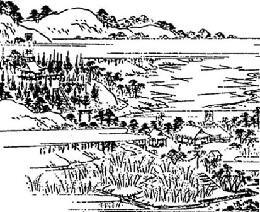
The Edo Satokagura of the Yamamoto Yoshinobu troupe is said to have been founded by the first generation, Yamamoto Gonritsu Hiroshi, in 1373 (the 6th year of Ōan) during the early Muromachi period. The current head of the family, Mr. Yamamoto Yoshinobu, is the nineteenth generation. It is said that the Kagura performances began at the Kuniyasu Shrine near the Yamamoto family. In the "Edo Meisho Zue" (published in 1836, the 7th year of Tenpō), Kuniyasu Shrine and the temporary hall and shrine attendants' buildings are depicted. The building shown as the temporary hall is believed to have functioned as a prayer hall and was likely used as a place for various prayers and Kagura performances.
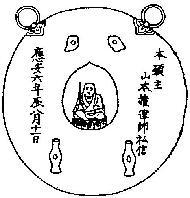
The Yamamoto family possesses numerous materials, including a manuscript called 'Shinji Shikimei Roku,' believed to be a copy from the mid-Edo period, which is a script for Kagura performances. They also have an ancient document titled 'Iwai Jindori Suzumori Gokagura Koshiki,' written in 1769 (Meiwa 6), which records the Kagura programs along with the props and expressions used. These materials reveal that the Satokagura tradition has been continuously passed down from the Edo period to the present. Additionally, records indicate that around the mid-Edo period, 50 Satokagura performances were held.
Performances of Edo Sato Kagura
Currently, the Yamamoto Yoshinobu company performs over 40 local Kagura plays, and the representative performances among them are as follows.
- Classical Works: Amano Ubihashi, Kōtsu Shunon, Sumie Ōkami, Yakumo Shinkei, Amano Iwatobira, Ken-dama Ikigami, Kami Sui Minokasa, Amano Kaeshiya, Yūken Bunkai, Tenson Kōrin, Kasasa Sakuragari, Yamakai Kōi, Yōzoku Senmetsu, Miwa Kamisugi, Saho Tōbatsu, Kuma So Seibatsu, Tōi Seibatsu, Sakeori Renga, Kyōdai Tanyu, Okuchō Hōraku, Keishin Aikoku, Mihozaki Gyotsuri
- Modern Things: Autumn Leaf Viewing
- [Fairy Tale] Inaba no Sugoto
This page is managed by the Lifelong Learning Division, Department of Education
Inagi City Local History Museum
1-9-1 Hirao, Inagi City, Tokyo 206-0823
Phone number: 042-331-0660 Fax number: 042-331-0660
Inquiries to the Lifelong Learning Division, Department of Education, Inagi City