


Rissōbashi Monument


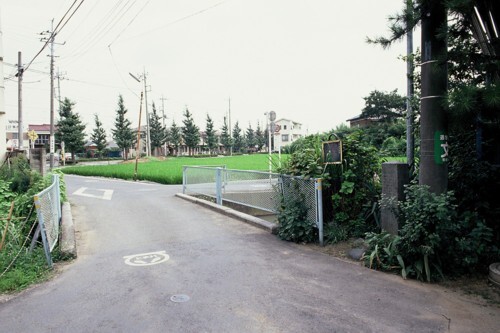
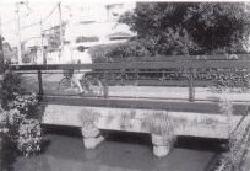
At the foot of the bridge spanning the Omaru Irrigation Canal (Sugebori) beyond 656 Higashi-Naganuma, there is the Mugwort Grass Bridge Monument. This stone monument was erected to commemorate the replacement of the wooden bridge over the Omaru Irrigation Canal, which played a very important role as agricultural water at the time, with a stone bridge in 1838 (the 9th year of the Tenpō era) through the cooperation of the villages of Naganuma and Oshitachi.
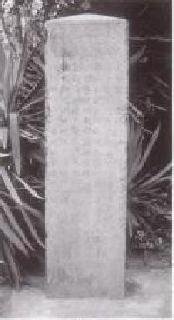
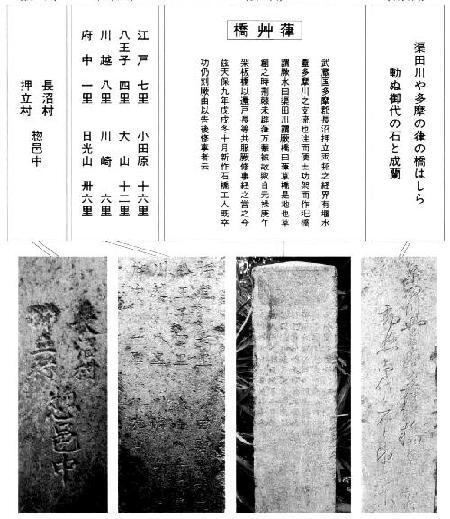
The stone monument is a rectangular pillar measuring 126 cm in height, 35 cm in width, and 23 cm in thickness. The origin of Mugikusabashi Bridge is inscribed on its surface. The inscription notes that the stone bridge was completed in October of the 9th year of the Tenpō era, but there is no record of the exact date when the monument was erected. It is believed to have been built sometime after the 9th year of Tenpō, likely during the late Edo period. On the right side of the monument, a poem is engraved: "The pillars of Mugiku Bridge over the Kyuden River and Tama remain as stones in an unchanging era," expressing the villagers' wish for a stable society. The left side lists distances to various locations including Edo, Hachioji, Kawagoe, Fuchu, Odawara, Oyama, Kawasaki, and Nikko, indicating its function as a guidepost. On the back, it is inscribed with "Naganuma Village and Oshitachi Village General Community," showing that the monument was erected through the cooperation of both villages.
The old road crossing Mugikusabashi Bridge led north to the ferry crossing on the Tama River (Oshitachi no Watashi) and was one of the main roads at the time. For Naganuma Village on the south side of Oshitachi Village north of the Omaru Irrigation Canal, the existence of Mugikusabashi Bridge on this main road was extremely significant, and replacing the wooden bridge with a stone bridge was a long-cherished wish of the villagers from both communities. Although the Mugikusabashi Monument commemorates the stone bridge, it is a rare and valuable stone monument that also served as a guidepost.
This page is managed by the Lifelong Learning Division, Department of Education
Inagi City Local History Museum
1-9-1 Hirao, Inagi City, Tokyo 206-0823
Phone number: 042-331-0660 Fax number: 042-331-0660
Inquiries to the Lifelong Learning Division, Department of Education, Inagi City